
Keeping up with regulations, especially concerning environmental incident reporting for utility companies, is a tall order these days. Decades of regulatory foundations are being re-examined, and long-held assumptions about environmental protection are under scrutiny.
On one side are the protectionists, on the other, the reformers, but for utility professionals, the truth and the responsibility lie somewhere in between.
For those on the ground —supervisors, field technicians, and environmental safety teams —the challenge is maintaining compliance while remaining efficient and responsive in the field. The pressure is real, but so are the opportunities. Opportunities for you and your field teams to grab the reins and steer towards a more standardized and efficient future. At least, in terms of field reporting and collaboration, that is.
Fortunately, modern digital tools are helping utilities standardize reporting, improve collaboration, and gain real-time visibility into environmental incidents. In this guide, we’ll explore how changing regulations have reshaped reporting processes—and how forward-thinking teams are turning these challenges into operational wins.
Utility Field Reporting – 1st Reporting – Field Reporting Solutions For The Utility Sector
Summary
- Environmental compliance is tightening across North America, and utilities must adapt quickly to evolving regulations and complex reporting obligations.
- Field teams face persistent challenges—tight reporting timelines, data inaccuracies, and communication gaps between the field and management.
- Standardization, training, and digital tools (like 1st Reporting) are key to improving accuracy, accountability, and regulatory compliance.
- Modern technology and AI adoption are transforming incident reporting workflows, enabling real-time visibility and proactive management.
- Building a proactive reporting culture—balancing preventive, proactive, and reactive measures—creates long-term value, safety, and sustainability for utility operations.
The Regulatory Landscape: A North American Perspective
Operating effective and efficient utility services is no easy task. Just take a look at the facts: In 2023, as much as 28% of U.S. public water systems experienced at least one violation in drinking water standards. Drinking water: crucial to a healthy population. (“Providing Safe Drinking Water in America: National Public Water Systems Compliance Report | US EPA”, 2025)
If crucial and critical utility services fail, our communities fail. For this simple reason, the regulatory landscape surrounding these utilities is highly complicated, as you are no doubt aware. The procedures for even a minor spill or environmental incident are challenging to maintain, but necessary for operation. For example, in the United States:
If a release of an Extremely Hazardous Substance (EHS) or a CERCLA hazardous substance occurs at or above its Reportable Quantity (RQ), facilities must immediately notify the State/Tribal Emergency Response Commission and the Local/Tribal Emergency Planning Committee for any potentially affected area; CERCLA hazardous substances must also be reported to the National Response Center (NRC) at 1-800-424-8802. A written follow-up is required. (“EPCRA Emergency Release Notifications | US EPA” 2013)
The above example is from only a single type of event. Furthermore, depending on the nature of the environmental incident, where it is located, the locales affected or possibly affected. The potential danger (to say the least), these factors create the need for more specific utility reporting workflows and regulatory compliance. With that said, the core concept is that we need to find a better way to address current field reporting conditions to meet the actual regulatory requirements and their respective changes.
This changing regulatory landscape tells us one thing: regulations can change, and so our systems must also change and possess an adaptive nature if they are to be effective reporting solutions for today’s regulations and tomorrow’s regulatory changes and challenges. Let’s take a look at some common challenges and see if we can identify a pattern or trend we can leverage to improve our field reporting operations.
Key Challenges for Utility Field Teams

Working in the technical field services — directly or indirectly with utilities — I learned that there are a number of challenges facing service operations that differ from those I had to manage in mobile service operations. Three of these challenges stand out in my mind: the time-sensitive nature of incident reporting, the accuracy of field-collected data, and the communication of critical information between field personnel and the management team, often off-site.
Time-Sensitive Reporting
Environmental incident reporting is critical and time-sensitive, especially when environmental or human safety is at risk. The timely reporting of environmental incidents in the utility sector is no exception. In fact, there are even triggers documented in the regulation that specify how we determine which timeline and required documentation are needed, when, and for what situations. For example:
Federal rules specify that a release of an EHS or CERCLA hazardous substance at or above its RQ within any 24 hours triggers the §304 emergency release notification obligation; RQs are set by EPA under CERCLA §102 and vary by substance. (“40 CFR Part 355 — Emergency Planning and Notification” 2025)
There are even more reporting requirements, if we dive a little deeper, as I’ve outlined in the table below, relating to spills and release of hazardous substances, as found in the U.S. Code of Regulations:
| If a reportable quantity of a substance is released within 24 hours at your facility | And if the release is reportable under EPCRA Section 304, you must | And if the release is reportable under CERCLA Section 103, you must |
| (a) And the substance is on BOTH the list of EHSs (Appendices A and B of this part) AND the list of CERCLA Hazardous Substances (40 CFR 302.4) | Notify the LEPC and the SERC in accordance with §§ 355.40 through 355.43 of this part (except for a release during transportation or from storage incident to transportation; see § 355.42(b)) | Comply with the release notification requirements of CERCLA section 103 and its implementing regulations (40 CFR part 302). Call the NRC at 800-424-8802. |
| (b) And the substance is on the list of CERCLA Hazardous Substances (40 CFR 302.4) and not on the list of EHSs (Appendices A and B of this part) | Notify the LEPC and the SERC, in accordance with §§ 355.40 through 355.43 of this part (except for a release during transportation or from storage incident to transportation; see § 355.42(b)) | Comply with the release notification requirements of CERCLA section 103 and its implementing regulations (40 CFR part 302). Call the NRC at 800-424-8802. |
| (c) And the substance is on the list of EHSs (Appendices A and B of this part) and not the list of CERCLA Hazardous Substances (40 CFR 302.4) | Notify the LEPC and the SERC in accordance with §§ 355.40 through 355.43 of this part (except for a release during transportation or from storage incident to transportation; see § 355.42(b)) |
(“40 CFR Part 355 Subpart D — Additional Provisions” 2025)
Field Data Accuracy
One of the most challenging scenarios I faced as a field service supervisor was ensuring the accuracy of data from field operations. For example, technicians who did not record the appropriate information typically had to schedule a second site visit to gather the necessary information. Sometimes it was due to the newer technicians’ lack of experience, but often it was merely caused by overlooking one or more elements of the scenario.
To make a long story short, I had to send a technician back to the site multiple times because the data they collected in the field was inaccurate. Even worse were scenarios involving replacing equipment or components. When something as simple as a seal goes and a technician returns to fix it with the wrong parts, it doesn’t just cause a scheduling and logistics nightmare. Still, it also extends the time during which equipment failure and repair cycles are prolonged due to misinterpretation, a lack of credible information, or, sometimes, a communication breakdown, which I’ll cover next.
Communication Breakdown
There are two types of communication breakdowns that can occur between management and field personnel: verbal and written. Let’s look at these forms of communication as they pertain to field reporting of environmental incidents, such as spills.
A field technician might do two things: call in the incident to their supervisor, and document the incident (and their response to it). Therefore, there are two possible sources of error in the incident communication process: verbal or written communication errors.
Obviously, the written communication portion of environmental incident reporting heavily relies on the methods used to document incidents. Back in the day, that was solely through a relatively old technology: paper-based reports. These reports were flawed for a number of reasons, from ease of damage and report loss (losing paperwork can happen) to communication gaps between verbally communicated facts and those written in a report.
The misalignment between paper reports and what was reported during phone calls was often a source of irritation when managing service jobs and incidents. Even with best practices, we were still tied to those paper reports as our sole source of proof and field data.
Best Practices in Environmental Incident Reporting
The three best practices, takeaways from decades of field service management, are, in my opinion:
- Standardize your field reporting practices.
- Train all team members on standard practices for environmental incident reporting.
- Integrate custom environmental and compliance reporting that is directly relevant and required in your specific sector to maintain safety, compliance, and appropriate documentation.
Standardization in Environmental Incident Reporting
Whether your organization operates in the United States or Canada, environmental incident reporting processes remain similar, so a formal standardization is quite possible, even necessary. For example, we demonstrated the basics of reporting an environmental-related incident in the U.S. The Canadian counterpart is not all that different:
Canada’s E2 Regulations (SOR/2019-51) cover 249 listed hazardous substances and require reporting of environmental emergencies and, for higher-risk facilities, environmental emergency plans. The regulations are current as of September 15, 2025. (Government of Canada, 2019)
ECCC’s official guidance states that whenever any of the 249 Schedule 1 substances is accidentally or unlawfully released, it must be reported to federal authorities, using the prescribed written report format (Schedule 8) where applicable. (Canada, 2019)
As you can see, whether in either country, the reporting process for environmental incidents is similar, albeit with different regulatory bodies overseeing and managing. So, if your organization works across borders, a standardized approach to environmental incident reporting is only possible if it’s tailored to specific regulatory frameworks, depending on location and local government regulations.
Field Team Training and Accountability
With changing regulations come changing reporting requirements. You can appropriately address these changes as they come, or let field personnel use the excuse that they forgot or didn’t know about specific reporting procedures or requirements. Of course, these sorts of situations can happen easily. That’s why appropriate training, retraining, and accountability measures are crucial to any successful field-service organization.
Using tools like the 1st Reporting application is perfect for fostering a sense of accountability among your field personnel. How can it do this, you ask? By applying dynamic form data collection, such as GPS-powered location and time data, to user data (field personnel using technology to complete their reports). By automating these sorts of data collection in the field, field personnel understand that their location, time, and identity are recorded digitally as part of the reporting process itself (when using technology instead of paper and a clipboard for environmental incident reporting in the field).
Compliance, Safety, and Environmental-Related Reporting Regulation Integration
One of the biggest challenges in managing field-related incidents, such as environmental incidents, was integrating regulatory compliance, reporting requirements, field personnel safety, and data collection into a unified reporting process. That process itself often hinders efficient environmental incident reporting by adding excessive paperwork.
Simultaneously, field personnel had little control over adding media to reports. That is, until field reporting tools like the 1st Reporting application became available. Let’s talk more about the tools and technologies that make field reporting easier and environmental incident reporting more effective and efficient, contributing to faster, more controlled incident response.
Tools & Technologies for Efficient Reporting | Spill Reporting Tools for Utilities

Field reporting technology is rapidly evolving, even in the utility sector. In fact, a relatively new study by IBM shows that 74% of energy and utility organizations are embracing technology with the internal adoption of AI for specific processes. (“New IBM Study Data Reveals 74% of Energy & Utility Companies Surveyed Embracing AI” 2025)
To coincide with the adoption of efficiency-boosting technologies, one such application stands out in the sea of mediocrity of applications as a tried, tested, and truly transformative reporting technology: The 1st Reporting application.
Spotlight – 1st Reporting App
Let’s cut right to the point: Your organization needs a standardized, yet customizable and capable application for managing environmental incident reporting. However, you don’t need a separate application to deal with specific incident types. Instead, it’s obviously more efficient if a solution is both intuitive and customizable enough to make a difference for all field reporting workflows, from environmental incidents to spill reporting to utility emissions tracking to equipment safety inspections.
The solution is the 1st Reporting app, available on this website, Google Play, and The Apple App Store. Here are a few of the key features your team is going to love:
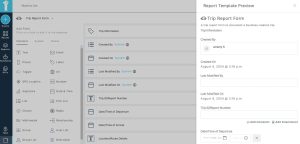
- Form Builder – Using our intuitively easy drag and drop form editor, you can modify any of the existing forms in our template library or create your own form from scratch. To help with this process, 1st Reporting has an AI-powered form builder assistant called Template Genie. This AI-powered form builder can create complex forms tailored to your needs. All you need to do is tell the AI form-building tool what you want it to build or edit, and it does the work for you. The chat-like interface is recognizable and easy to use for all assigned users.
- Workflow Builder – Using the 1st Reporting application, you can create custom forms, custom tasks, and even custom workflows. These workflows can include automated sending of forms, notifications, or tasks to specified team members or teams. This powerful, fully customizable feature means your team can set up environmental incident reporting workflows that include all the response stages and steps necessary to automate incident response, with instant communication and collaboration among specified stakeholders.
- Alerts/Notifications – The customizable notification system in the 1st Reporting app is impressive. Still, once you dive in, you’ll realize it’s much more powerful than you might expect. The alert system in the app enables the notification of specific people, at particular times, when specific actions take place, and in specific conditions. It ultimately provides you with the means to build entire, dynamically managed workflows with instant notifications, promoting fast response, accountability, and incident response collaboration.
- Employee Handbook – When you manage field mobile service, maintenance, and installation teams, you know the value of providing them with the correct information when they need it—equipment manuals, workflow checklists, incident response procedures, and SOPs. The 1st Reporting application solves this collaborative logistical challenge with a feature we call the Employee Handbook. In short, it’s a cloud-based storage feature that is both secure and provides field personnel with instant access to uploaded documents or media they need to complete their work safely and effectively.
- KPI Reports – Paper-based reports take time to review – much time. That lengthy process enables multiple points of error to creep into the assessment, especially where numerous reports are involved. The 1st Reporting application makes this easier by providing KPI reports for easy incident management and analysis. You can see trends in reporting instantly with the built-in reporting features, which would otherwise cost tens of hours or more in labor for report assessment.
- Public Reporting – A feature particularly useful for public-facing organizations like utility service providers, the public reporting features of the 1st Reporting app provide a tool for organizations to gather reports from the public, whether anonymized or not. This feature lets you collect data on customer complaints, outages, and other factors that directly impact your operations.
Environmental Incident Reporting Resources for North America
Speaking of solutions, a few convenient resources related to environmental incident reporting would be helpful. To better help you manage environmental incident reporting, we’ve compiled a strategic list of resources in the following table. Feel free to bookmark this web page for future reference.
| Country | Regulatory Body | Notes & Key URL |
| United States | United States Environmental Protection Agency (EPA) | The primary federal environmental regulator; utilities often report spills/releases, water/waste issues, etc. Example resource: “Incident Action Checklists for Water Utilities”. Environmental Protection Agency |
| Pipeline and Hazardous Materials Safety Administration (PHMSA) | Handles incident reporting for pipeline/hazardous material releases. Example: “Incidents should be reported to the National Response Center (1-800-424-8802) …” PHMSA | |
| Bureau of Safety and Environmental Enforcement (BSEE) | For offshore oil & gas incidents, pollution events on the Outer Continental Shelf. BSEE | |
| Canada | Canada Energy Regulator (CER) | Oversees pipeline incident reporting in Canada; has public “Event Reporting Guidelines”. Canada Energy Regulator |
| Environment and Climate Change Canada (ECCC) | National environmental oversight, for pollutant release inventories, reporting of substance releases, ECCC | |
| Mexico | Secretaría de Medio Ambiente y Recursos Naturales (SEMARNAT) | Mexico’s federal environment ministry oversees environmental regulation, releases, and compliance. mexlaws.com |
| Procuraduría Federal de Protección al Ambiente (PROFEPA) | The enforcement arm of SEMARNAT is necessary for incident reporting/enforcement in Mexico. PROFEPA | |
| Comisión Nacional del Agua (CONAGUA) | CONAGUA – The National Water Authority. CONAGUA | |
| The Agency for Security, Energy, and Environment (ASEA) | ASEA – The Agency for the Hydrocarbons Sector, Agency for Security, Energy, and Environment. ASEA |
Building a Proactive Environmental Reporting Culture
Suppose maintenance and equipment management have taught me anything in the years I managed mobile service teams. In that case, it’s this: you must maintain a healthy balance of reactive incident management with proactive and preventive management. It applies not only to utility-specific equipment but also to safety-related equipment, such as fall restraints and other PPE, for boom-lift trucks and heavy equipment.
Balancing these forms of incident management is crucial, especially when it comes to environmental reporting and company culture. I’ve created a few charts to explain this point visually. The assumptions made are as follows:
- Environmental incidents happen. Although most are preventable, there will always be uncontrolled situations that create emergency scenarios.
- Focusing on a balance between preventive, proactive/predictive, and reactive responses drives long-term value, just as it does in equipment maintenance, and how that affects equipment downtime. Read more about proactive and predictive maintenance here.


As you can see in the above charts, we can devote more focus to balancing environmental incident response by linking incident data to prevention and sustainability goals. We should encourage real-time reporting and team accountability within the environmental incident reporting framework. In that case, we work towards a better-informed, more unified environmental incident response management. Thus, a more effective culture of collaborative and accountable incident reporting.
Practical Steps to Implement in Your Utility Organization

Taking charge of your environmental incident reporting is a smart move. In our experience, you can adopt and integrate mobile reporting technologies like the 1st Reporting application in three steps:
- Audit current reporting workflows. Determine which stakeholders are appropriate and what information is needed from the field for each.
- Choose and configure reporting tools. Sign up for a powerful reporting solution, like the 1st Reporting app. With the role and access controls at your fingertips, you can create specific reports, customized incident documents, and assign teams to work with those customized environmental incident reports. Invite your team, assign each a role with access, and customize your reporting to suit.
- Train teams, monitor compliance, and refine workflows. Lastly, you merely need to review the customized environmental incident reports in the application with your team and provide them with instructions to complete the report on their mobile devices. This mobile feature enables your field personnel to use the smartphones they already carry to create and complete comprehensive field reports, including media like photos and video within the report itself.
Suppose you’re ready to take control of your environmental incident reporting (and all other relevant field reporting workflows, from safety to site condition audits). In that case, you’ll want to start your 1st Reporting trial right now. Let’s face it, there’s no time like the present to improve your field reporting, whether for environmental incidents or otherwise.
References
All reference data accessed Oct 24, 2025.
- “Providing Safe Drinking Water in America: National Public Water Systems Compliance Report | US EPA.” 2014. US EPA. Accessed October 24, 2025, https://www.epa.gov/compliance/providing-safe-drinking-water-america-national-public-water-systems-compliance-report.
- “EPCRA Emergency Release Notifications | US EPA.” 2013. US EPA. August 20, 2013. https://www.epa.gov/epcra/epcra-emergency-release-notifications.
- “40 CFR Part 355 — Emergency Planning and Notification.” 2025. Ecfr.gov. 2025. https://www.ecfr.gov/current/title-40/chapter-I/subchapter-J/part-355.
- “40 CFR Part 355 Subpart D — Additional Provisions.” 2025. Ecfr.gov. 2025. https://www.ecfr.gov/current/title-40/chapter-I/subchapter-J/part-355/subpart-D.
- Branch, Legislative Services. 2019. “Environmental Emergency Regulations, 2019.” Justice.gc.ca. 2019. https://laws-lois.justice.gc.ca/eng/regulations/sor-2019-51/FullText.html.
- Canada,. 2019. “Information Archivée Dans Le Web | Information Archived on the Web.” Publications.gc.ca. 2019. https://publications.gc.ca/collections/collection_2019/eccc/En4-376-5-2019-eng.pdf.
- “New IBM Study Data Reveals 74% of Energy & Utility Companies Surveyed Embracing AI.” February 26, 2024. IBM Newsroom. Accessed October 24, 2025, https://newsroom.ibm.com/2024-02-26-New-IBM-Study-Data-Reveals-74-of-Energy-Utility-Companies-Surveyed-Embracing-AI.