
Security incident reporting software is a relatively new type of application that is streamlining security and law enforcement.
Because these security incident reporting applications are somewhat new in organizational society, it’s no wonder many agencies still use paper forms to report security incidents. However, it’s best to understand some of the software’s finer points before deciding to implement it in your organization.
Transitioning from paper to the cloud is easier than you think; read our Ultimate Guide to Digital Reporting for Security Guard Operations.
The Scoop on Security Incident Reporting Software
By industry, we find that security incidents vary significantly. For instance, in IT, a security incident typically involves a hack or an exposed vulnerability in software or even hardware. However, in law enforcement and security, a security incident usually involves either unlawful or unruly behavior.
What is incident reporting in software?
Information security incident reporting is the process of documenting incidents that compromise information security. Software that has proven to have vulnerabilities might have an exposure event that triggers the need to classify it as a security incident and proceed to document and mitigate it.
The Berkeley Information Security Office offers us some examples of security incidents that include:
- Loss or theft of equipment that stores data
- Computer system breach
- Unauthorized access to, or use of, systems, software, or data
- Denial of service attack
According to the University of Michigan, the goals of implementing an effective security management system include:
- Mitigation of impact on critical sectors.
- Identifying the causes of security breaches to better prevent recurrences.
- Protecting and preserving information after documenting the incident for future analysis.
- Ensuring all relevant parties are kept abreast of their responsibilities in the event of security breaches.
- Protecting the reputation of the organization.
These core principles, typically used in the IT industry for security incident reporting and management, are not that dissimilar from those applied across all sectors. However, let’s contrast these principles with what we would expect within the security industry.
What is incident reporting in security?
Incident reporting in security obviously has a different meaning in the context of the event itself. However, typically, we see that, although very different, there are many similarities between the two incident types.
Incident reporting in security involves observing and documenting events that transpired to create an unwanted situation. The undesirable situation can take many forms, from an assault to the destruction of property or even merely a disturbance.
How about law enforcement?
If we are to imagine a software platform that might help report these events, it is understood that one would consider an industry-specific solution. However, there are commonalities between all organizations that still require a business owner’s (or manager’s) attention.
For example, even a police department or security firm has an office. And in that office, there is potential for incidents ranging from slips and falls to equipment malfunctions.
Likewise, a cybersecurity firm operates with offices and sometimes very sophisticated equipment. All of these situations have the potential to lead to an internal incident.
In the case of internal incident reporting, one size might well fit all. That is, if it is robust enough to get the job done.
What To Look For In Security Incident Reporting Software
Try the 1st Reporting application today for your mobile security reporting.
All industries share the same potential for internal office incidents. Nearly all industries have a range of other potential incident-creation scenarios. Wouldn’t it be nice if there were a software platform an organization could use for all its security, vehicle, equipment, software, and other reporting needs?
Luckily, one app can handle just about any potential incident—1st Reporting Incident Reporting Solutions. But don’t take our word for it. In fact, you should consider several things about it and other applications before you decide. Let’s take a look at a few of the features that you should be concerned with.
- Flexibility
- Ease of Use
- Mobility
- Integrations
- Scalability
Flexibility.
Does the security incident platform offer the flexibility to work for other scenarios? For example, a daily vehicle inspection, a team member injury report, or even a use-of-force report? Likely, you won’t want to pay for and learn to use two or more platforms to manage your incident reporting, so finding a flexible platform like 1st Reporting is essential.
Ease of Use.
A reporting platform is only effective if your organization can adopt it quickly and effectively. The more difficult a platform is to navigate, the less cost-effective it becomes, as it extends training costs. Similarly, a complicated platform invites greater potential for user error. Therefore, the platform must be easy to use and navigate.
Mobility.
Security incident reporting might focus on a specific location, such as your office, but it may also be relevant at client sites or in public places. Therefore, you need to consider the mobility of a reporting platform. When a security reporting platform like 1st Reporting is implemented, you can rest assured that your team can use the application from anywhere. With a powerful offline reporting mode, your team can even document an incident without internet connectivity on an Android or iOS device. The application uploads the information later when a connection is established. It ensures that your team can complete their incident reports on the go, no matter where they are.
Integrations.
Many businesses and organizations already use software within their organizations. Therefore, a reporting platform that integrates with existing solutions, such as Microsoft Teams, is invaluable.
Scalability.
If there’s one thing you don’t need, it’s to work with a security reporting platform for a while and then hit a platform limitations wall. Integration can take time, and time is money. Furthermore, shifting gears and reintroducing a more appropriate solution after you’ve already established another is something we’d like you to avoid. A preferred reporting software solution will enable scalability so that as your organization grows, it grows with you.
More Security Resources
Application Fees, Paid Plans, and Pricing Transparency
Apps are a dime a dozen these days. However, beneficial apps developed by teams that genuinely care about their client experience are somewhat rare. You’ll see some of this reflected in the pricing structure of many so-called reporting applications.
When it’s time to move the filing cabinet out and into a digital reporting environment, the cost is inevitably a factor. However, when evaluating the application’s cost, we also need to consider its features and requirements.
Many applications boast various features, but their pricing is incoherent or not readily available. A company’s price transparency is a direct reflection of its business philosophy. That’s why you’ll find easy-to-understand, clear, and concise pricing for our security incident reporting software.
Utilizing an in-depth solution like 1st, you can expect to pay $10 per user per month. However, we’ve got a free tier for up to 5 users, so you can try the app yourself and see what difference a professional application can make.
Security Incident Reporting Software Platform Availability
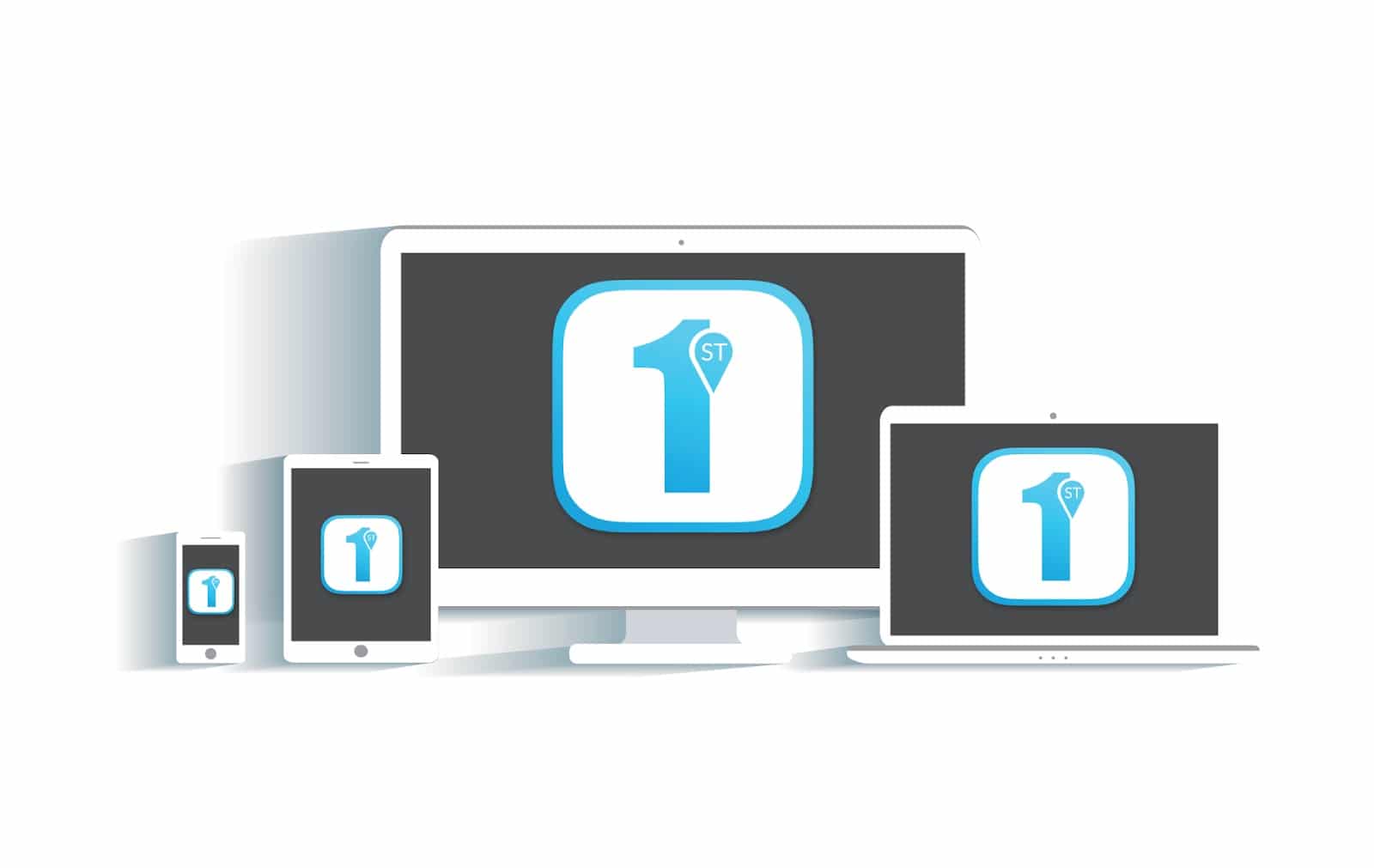
It’s worth noting that not every application will work well for your organization, given the equipment currently in use. That’s why at 1st Reporting, we wanted to ensure we had all the bases covered.
1st Reporting works on Android and iOS devices. Similarly, you can run the management dashboard on laptops and desktops, so no matter the equipment you’re using in the office or the field, 1st has your back.
During your analysis of platforms, consider if they have the flexibility and usefulness of 1st. And when in doubt, reach out to us, and you’ll find there’s a human on the other end. We’re dedicated to providing you and your organization with the best possible solution – and we’ll prove it!


